

Spending hours staring at spreadsheets and tweaking meta tags only to watch your search traffic flatline is incredibly frustrating.
You hear constantly about how artificial intelligence handles the heavy lifting now. Yet, when you try generic chatbots to help with your strategy, they just spit out repetitive text that Google completely ignores. It feels like there is a secret layer of software professional marketers use to actually rank higher.
The gap between struggling sites and high-traffic blogs rarely comes down to working harder. It usually involves leveraging specialized platforms to reverse-engineer search intent and speed up on-page optimization.
For digital marketers and bloggers tired of guessing, exploring the 10 best AI SEO tools reveals how modern workflows truly operate. Read on to see which platforms genuinely drive organic traffic without requiring an advanced technical background.
What Are AI SEO Tools and Why Do You Need Them?
Think of AI SEO tools as a super-smart assistant for your website. In simple terms, they are software that uses artificial intelligence to make search engine optimization faster, more efficient, and far more powerful. Instead of you manually sifting through endless data, these tools do the heavy lifting. They analyze patterns, track competitors, and find keyword opportunities you might have missed.
So, why do you actually need them? Because the world of SEO is no longer just about keywords. It’s about understanding what people truly want when they search. AI for SEO helps you decode that user intent, automate time-consuming tasks like technical audits and content briefs, and ultimately, create content that both users and Google will love. In 2025, using these tools isn’t just an advantage—it’s essential for keeping up.
How We Chose the Best AI SEO Tools for This List
We didn’t just pull a random list off the internet. To find the best AI SEO tools that are genuinely worth your time, we rolled up our sleeves and put them to the test. Our goal was to find tools that deliver real-world results, not just fancy features.
Here’s a peek at our simple, no-nonsense criteria:
- Hands-On Testing: We spent hours using these tools for actual SEO tasks—from keyword research to content optimization—to see how they performed.
- Core Functionality: We looked for tools that excelled in a specific area, whether it was creating amazing content, nailing technical SEO, or offering a great all-in-one solution.
- Ease of Use: A powerful tool is useless if you can’t figure out how to use it. We prioritized platforms that are user-friendly for both beginners and pros.
- Real Value and Pricing: We weighed the cost against the features to ensure you’re getting a great return on your investment.
Boost Your Rankings with AI SEO Tools for Beginners
| Best AI SEO Tools for Beginners | Beginners 🌟 | Intermediate 📈Advanced Users 🚀 |
| Surfer SEO | Easy Setup | Advanced Analytics |
| Semrush | All-in-One | Enterprise Features |
| NEURONwriter | Step-by-Step | Competitor Analysis |
| Scalenut | Quick Content | GEO Optimization |
| SEOptimer | Fast Audits | White-Label Reports |
| Frase | SERP Analysis | Brand Voice |
| Outranking | Data-Backed | E-E-A-T Alignment |
| MarketMuse | Topic Authority | Personalized Difficulty |
| RankIQ | Blogger-Focused | Content Optimizer |
| Jasper | Brand Consistency | Marketing Workflows |
1. Surfer SEO
Ready to create content that dominates both Google and AI-driven search? Surfer SEO is an indispensable tool for content creators and SEO specialists who are serious about ranking. It provides a data-driven workflow that takes the guesswork out of optimization, ensuring your articles are perfectly tuned to what search engines are looking for.
Surfer analyzes the top-ranking pages for your target keywords and gives you a clear roadmap to follow. From identifying content gaps and suggesting relevant terms to automatically adding internal links, it streamlines the entire on-page SEO process. This tool helps you write smarter, not just harder.
Surfer SEO Pros & Cons
Pros:
- Optimizes content for Google and AI search.
- Get real-time feedback on content quality.
- Automatically adds relevant internal links instantly.
- Powerful integrations with WordPress and Google Docs.
Cons:
- Can be costly for bloggers and solopreneurs.
- Advanced features may have a slight learning curve.
Pricing:
Offers flexible monthly plans and add-ons for teams and individuals.
2. Semrush

For marketing professionals and businesses aiming for a complete 360-degree view of their online presence, Semrush is the ultimate AI-powered toolkit. It goes beyond standard SEO, offering a massive suite of integrated tools for everything from keyword research and competitor analysis to content marketing and advertising.
Trusted by millions, this platform leverages a huge database to deliver AI-driven insights that help you build a data-backed strategy. It automates technical audits and provides AI recommendations, making it easier to scale your SEO efforts and achieve measurable growth.
Semrush Pros & Cons
Pros:
- Extensive all-in-one marketing and SEO tools.
- Finds billions of keywords with AI.
- Analyzes competitor strategies and backlink gaps.
- Automates technical audits and site reporting.
Cons:
- Higher price point for smaller businesses.
- The vast number of features can be overwhelming.
Pricing:
Offers several tiered plans designed for freelancers, agencies, and large enterprises.
3. NEURONwriter
For content creators and bloggers who want to create perfectly optimized articles with ease, NEURONwriter is a game-changer. This AI SEO tool focuses on helping you plan, write, and optimize your content based on what’s already ranking on Google. It’s like having an SEO expert guiding you every step of the way.
NEURONwriter analyzes the top SERP results for your target keyword and provides a clear, actionable checklist of semantic terms and content structure suggestions. Its AI can help you generate outlines, full articles, and even find new content ideas, making it an incredibly powerful and affordable tool for boosting your search visibility.
NEURONwriter Pros & Cons
Pros:
- Step-by-step content optimization guidance.
- Analyzes competitor content for insights.
- AI-powered writing and idea generation.
- Integrates with WordPress and GSC.
Cons:
- AI credit limits on lower-tier plans.
- Focus is more on content than technical SEO.
Pricing:
Offers highly affordable tiered plans, starting from just $19 per month.
4. Scalenut
If your goal is to not just rank on Google but also get cited by AI search engines, Scalenut is the platform for you. It’s designed for a “prompt-first” world, offering a complete suite of tools to plan, create, and optimize content that AI engines can easily crawl and reference. It uniquely helps you track your brand’s visibility across AI chats and even on platforms like Reddit.
Scalenut is perfect for forward-thinking marketers who want to master Generative Engine Optimization (GEO). It offers a powerful “Cruise Mode” for writing SEO blogs in minutes and a unique marketplace for building high-trust backlinks without the hassle of outreach.
Scalenut Pros & Cons
Pros:
- All-in-one platform built for AI visibility.
- Creates human-like content structured for AI.
- Builds trusted backlinks without cold outreach.
- Offers both DIY tools and managed services.
Cons:
- Can be complex for absolute SEO beginners.
- The full suite is a premium investment.
Pricing:
Provides both do-it-yourself software plans and fully managed expert-led services.
5. SEOptimer
For digital agencies, freelancers, and small business owners who need a fast, clear, and professional way to audit websites, SEOptimer is the perfect tool. It’s famous for its comprehensive SEO audits that analyze over 100 data points in seconds, providing a prioritized list of actionable recommendations to improve your site’s health and rankings.
What makes SEOptimer stand out is its powerful white-label reporting feature. You can generate beautiful, branded PDF reports for your clients, complete with your own logo and company details. It even offers an embeddable audit tool to help you generate leads directly from your own website.
SEOptimer Pros & Cons
Pros:
- Generates detailed SEO audits in seconds.
- Creates beautiful, customizable white-label reports.
- Embeddable tool for on-site lead generation.
- Very affordable compared to other SEO suites.
Cons:
- Less focused on AI content generation.
- Advanced keyword features are not as deep as competitors.
Pricing:
Offers a free website analysis and several affordable monthly plans.
6. Frase

Frase.io is a revolutionary AI SEO platform that helps you create SEO + GEO optimized content that performs on Google and AI platforms like ChatGPT and Perplexity. It cuts your research time from hours to minutes while improving content quality and relevance.
Designed for content teams, marketers, and writers, Frase offers an all-in-one content workflow—from deep SERP analysis and user intent research to real-time SEO optimization and automated content outlines. With Frase, you stay ahead by fixing and boosting your content before competitors do.
Frase Pros & Cons
Pros:
- Optimizes content for both Google and AI search engines
- Real-time SEO and GEO content scoring
- AI-powered content outline and writing assistance
- Easy interface suitable for all skill levels
Cons:
- Higher learning curve for beginners
- Pricing can be steep for solo creators
Pricing:
Starts at $38/month with a free trial including 3 rank-ready documents to get you started risk-free.
7. Outranking
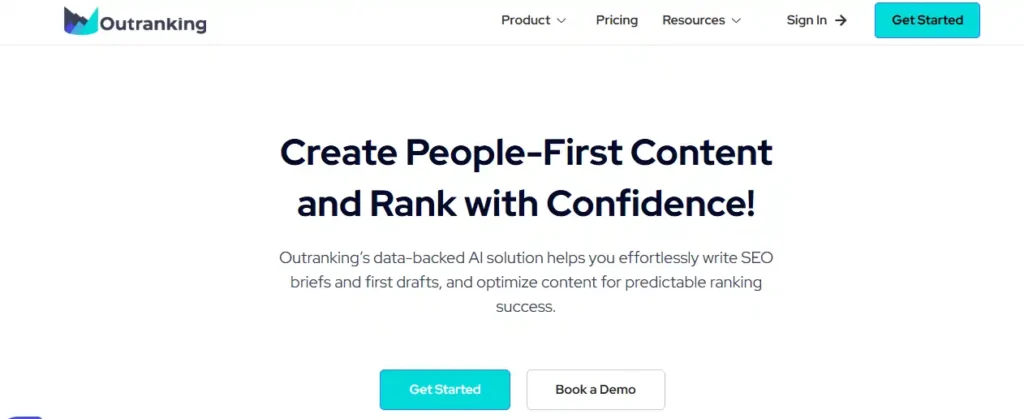
For content strategists and SEOs who prioritize factual accuracy and data-driven optimization, Outranking.io is an exceptional choice. This AI SEO tool stands out by creating people-first content that is deeply rooted in real-time SERP data, ensuring everything you write is relevant, accurate, and engineered to rank.
Unlike many AI writers that generate content in a vacuum, Outranking’s unique “Concepts” feature extracts key facts and ideas directly from top-ranking competitor pages. This allows its AI to build drafts on a foundation of proven information, helping you align with Google’s E-E-A-T guidelines effortlessly. It’s a complete workflow tool for planning, writing, and optimizing content with confidence.
Outranking Pros & Cons
Pros:
- Generates factually accurate, SERP-based first drafts.
- Unique “Concepts” feature improves content originality.
- Powerful keyword clustering and strategy tools.
- Automatic internal linking based on page authority.
Cons:
- The interface can feel complex for new users.
- “Concepts” feature consumes credits quickly.
Pricing:
Offers several plans for individuals, teams, and agencies, with a free trial available.
8. MarketMuse
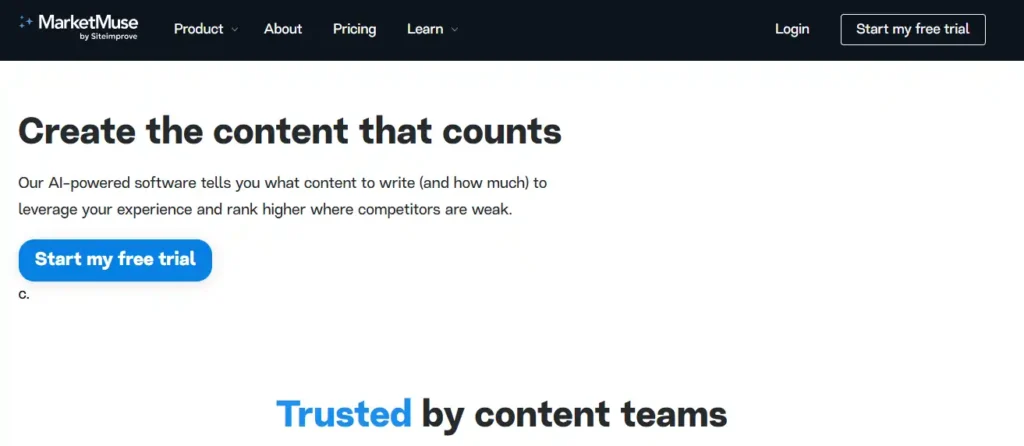
For content teams and SEO strategists who think beyond single keywords, MarketMuse is an enterprise-level AI SEO tool focused on helping you build topical authority. It moves past basic keyword research to give you a complete, data-driven content strategy that identifies your unique strengths and your competitors’ biggest weaknesses.
MarketMuse’s patented AI analyzes your entire website to pinpoint which topics you already have authority on, making it easier to decide what content to create or update for the biggest impact. It provides personalized difficulty scores and a roadmap for owning entire topic clusters, not just ranking for individual keywords. It’s the perfect tool for building a content moat around your business.
MarketMuse Pros & Cons
Pros:
- Identifies and expands on your existing authority.
- Finds content gaps your competitors have missed.
- Creates personalized, data-driven content plans.
- Patented topic modeling for superior suggestions.
Cons:
- Can be expensive for smaller teams or individuals.
- Has a steeper learning curve than simpler tools.
Pricing:
Offers a free plan for individuals and tiered premium plans for teams and agencies.
9. RankIQ
For bloggers who want to stop guessing and start ranking, RankIQ is the perfect AI SEO tool. Created by a top blogger, Brandon Gaille, it is specifically designed to solve the biggest challenges bloggers face: finding low-competition keywords and knowing exactly what to write about. It takes the complexity out of SEO so you can focus on creating great content.
RankIQ’s standout feature is its hand-picked keyword library for virtually every blog niche. This saves you countless hours of research by giving you a proven list of high-traffic, low-competition phrases. The content optimizer then gives you a clear, step-by-step guide on what topics and keywords to include in your post to compete for a first-page ranking.
Pros:
- Hand-picked library of low-competition keywords.
- Tells you exactly what to include in your post.
- Simplifies keyword research for all niches.
- Helps optimize old posts for quick traffic gains.
Cons:
- Lacks some advanced features of larger SEO suites.
- More focused on blogging than other forms of SEO.
Pricing:
Typically offered at a simple, affordable monthly rate, often with a significant discount.
10. Jasper
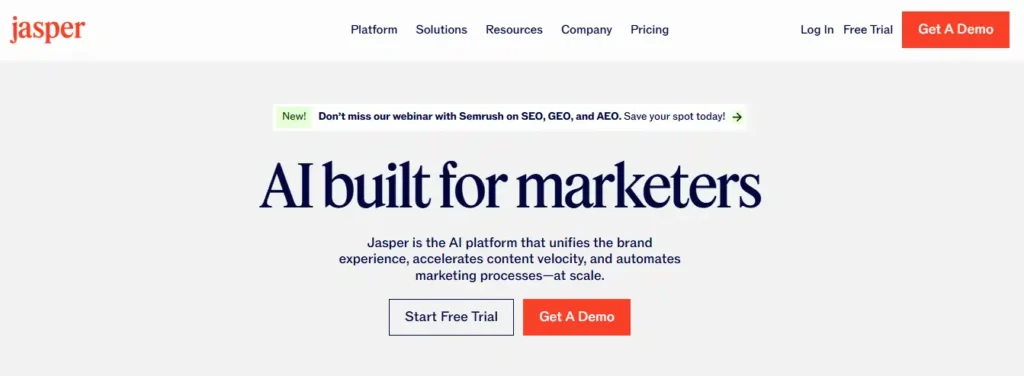
For marketing teams looking to create high-quality, on-brand content at scale, Jasper is the ultimate AI partner. While not a traditional SEO tool, it excels at producing the content that fuels your SEO strategy, from blog posts and landing pages to social media campaigns that drive traffic and engagement.
Jasper is an AI platform built specifically for marketers, ensuring every piece of content perfectly matches your brand’s voice and tone. Its intelligent agents and intuitive workspace help automate marketing processes, supercharge campaign velocity, and deliver consistent, high-performing content that resonates with your audience and supports your SEO goals.
Jasper Pros & Cons
Pros:
- Creates high-quality, on-brand content at scale.
- AI built specifically for marketing teams.
- Automates entire marketing campaign workflows.
- Maintains a consistent brand voice everywhere.
Cons:
- Not a dedicated technical SEO analysis tool.
- Pricing is geared towards teams and businesses.
Pricing:
Offers flexible plans for teams and enterprises, including a free trial.
How to Effectively Use AI for Your SEO Strategy
Owning a powerful AI tool is one thing; using it effectively is another. Think of AI as a co-pilot, not an autopilot. It’s there to guide and assist you, but your human expertise should always be in the driver’s seat.
- Align AI with Human Expertise (E-E-A-T): Google rewards content that shows experience, expertise, authoritativeness, and trustworthiness (E-E-A-T). Use AI to generate a first draft or an outline, but always have a human expert review, fact-check, and add personal insights and real-life examples. This combination is what makes content truly valuable.
- Focus on Solving Problems, Not Just Keywords: Use AI to analyze what the top-ranking pages for your target keyword are doing. What questions are they answering? What problems are they solving? Use these insights to create content that is more helpful and comprehensive than anything else out there.
- Let AI Handle the Data, You Handle the Strategy: Let the AI tools do what they do best: analyze massive amounts of data, find patterns, and automate repetitive tasks. This frees you up to focus on the bigger picture—your overall content strategy, building relationships, and creating a unique brand voice.
Frequently Asked Questions
Can AI replace SEO professionals?
No, AI is a tool that makes SEO professionals better, not obsolete. While AI can automate tasks and analyze data, it lacks the creativity, strategic thinking, and common-sense judgment of a human expert. The future is a collaboration between human strategists and AI assistants.
Will Google penalize me for using AI-generated content?
Yes, AI can generate SEO-optimized content by incorporating target keywords, suggesting relevant topics, and structuring articles for readability. This helps you create comprehensive content that ranks well.
Are AI SEO tools suitable for beginners?
Google’s main concern is the quality of the content, not how it was made. You won’t be penalized for using AI. You will, however, be penalized for producing low-quality, unhelpful, or spammy content—whether a human or an AI wrote it. As long as you use AI to create valuable, original, and human-reviewed content, you are perfectly fine.
What are the best free AI tools for SEO?
There are several great free options to get started. ChatGPT is fantastic for brainstorming ideas, creating outlines, and generating FAQs. Many premium tools on our list also offer free versions or trials that provide powerful features for keyword research and content analysis.
How do AI tools help with on-page SEO?
AI tools provide real-time feedback on your content, suggesting improvements for keyword usage, meta descriptions, and header tags. This ensures your pages are fully optimized for search engines.
Can AI tools help with technical SEO?
Yes, AI can automate technical SEO audits, identifying issues like broken links, slow page speed, and schema markup errors. This helps you improve your site’s health and performance.
How do I choose the right AI SEO tool?
Consider your goals, budget, and technical expertise. Look for a tool with features that match your needs, such as keyword research, content optimization, and technical audits.
Simplify Your SEO Success with AI-Powered Tools
These best AI SEO tools aren’t just hype. They’re game-changers I’ve battle-tested on stubborn sites that finally cracked page one. Surfer SEO crushes content gaps. Clearscope nails keyword clusters. The rest fill specific holes in your stack.
Don’t overthink it—grab a free trial from one that clicks with your setup. Cut the busywork today. Real rankings come from consistent action, not endless research. Which one’s getting your test run? Hit the comments or snag my affiliate links to jumpstart things—your SERPs are waiting.